Thought
What Will 2026 Hold in Store for Real Estate Sustainability Professionals?

After spending five minutes thinking about my first blog in 2026, I asked a popular AI agent for ‘predicted real estate sustainability trends in 2026’. The results were interesting.
Below, I’ve paired each AI-identified trend with my own view – grounded in experience, and shaped by how these ideas translate once they meet practice:
“Net-zero and energy-efficient buildings will become standard for new developments, supported by tighter building codes and rising energy costs.“
My view: True, but only where legislation requires it, and only for certain markets/asset types. Full cost benefit analysis is needed to identify where and how net zero aligns with fiduciary duty.
“Greater use of low-carbon and circular materials (e.g. mass timber, recycled steel, low-emission concrete) to reduce embodied carbon.”
My view: Similar to above, the business case for reducing embodied carbon is stronger in some markets (UK/EU) but lower in others (US/APAC). A case-by-case approach needs to be taken.
“Stronger ESG regulation and reporting, with sustainability performance directly affecting valuations, access to capital, and investor interest.”
My view: I am not convinced this will happen. I have seen companies pull back from commitments, reporting and regulation focuses on simplification (which is good) but not necessarily, strengthening.
“Smart building technologies widely adopted to optimise energy use, monitor emissions, and improve operational efficiency.”
My view: Yes, AI and smart tech can deliver value through driving NOI. However, there are a lot of new market entrants out there and I worry that the industry will be able to see the wood through the trees.
“Electrification and on-site renewables (heat pumps, solar, battery storage) accelerating decarbonisation of building operations.”
My view: We are seeing this, but uptake is uneven across geographies we work across.
“Climate resilience becoming a priority, as investors and insurers price in risks from flooding, heat, and extreme weather.”
My view: In real estate, we are seeing physical climate risks classed as a bigger and more immediate financial risk than transition risk. We expect this to be amplified in 2026, and beyond.
“Higher market premiums for sustainable assets, driven by lower operating costs, regulatory readiness, and tenant preferences.”
My view: The slowdown in construction (due to escalating costs) is also a big driver for premiums in high quality assets.
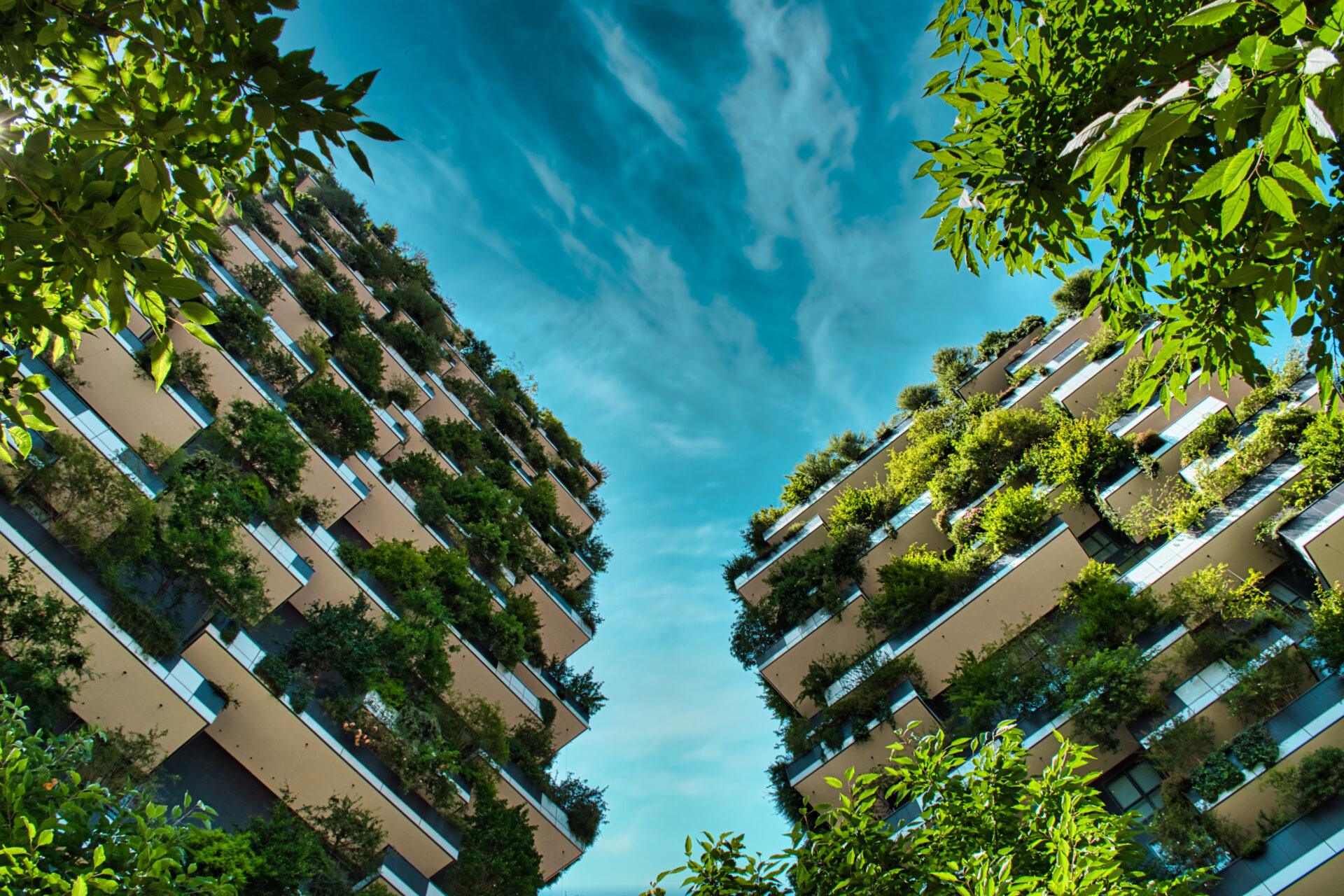
At a high level, the AI prompt pointed to a future where sustainability increasingly shapes how real estate is designed, built, operated, and financed, with greener, more resilient assets outperforming less efficient stock over the long term. That would be a good outcome. My view, however, is more nuanced:
There is growing acceptance that sustainability can deliver value. However, this is not yet matched by a material shift in regulatory drivers, with SFDR 2.0 a notable exception. At the same time, ongoing changes to requirements continue to drive indecision – and in some cases paralysis – when it comes to implementation.
Importantly, this recognition that sustainability can add value, especially in Europe and the UK combined with indecision and delay in implementation will present an opportunity for those willing and able to take action, which will pay out significantly in future years.
Finally, let’s also reflect on use of AI. It can help, and does speed up work. I, like many, use it regularly. We should remember though, it should be used to augment and support but not replace human experience!
At EVORA, we spend most of our time in rooms where sustainability decisions are being made – sitting with investors, asset managers, consultants, and peers across markets. That experience matters because while AI can summarise patterns from what’s already been written, it can’t judge intent, conviction, or hesitation in the room. It doesn’t see where people are aligned in principle but constrained in practice, or where enthusiasm is real versus performative.
Progress in sustainability will still depend on judgement, governance, and the ability to act under uncertainty.
In 2026, as an industry, we need to stop waiting for perfect signals (regulatory, market, or technological) and start making deliberate, portfolio-specific sustainability decisions grounded in value, risk, and feasibility.
Organisations should be serious about creating value from sustainability and to do so need to maximise value of AI (particularly to support analysis of investment grade data in the right places), but also benefit from experienced human judgement, and the ability to execute.
Good luck for 2026!